


Cookies help us deliver our services. By using our services, you agree to our use of cookies.
Low-Fat Diet: Fromm Family Nutritionals Low Fat
Fat is essential for the health and wellbeing of dogs, providing concentrated energy, efficient nutrient absorption, and protection of vital organs. In some instances, however, dog owners need to be mindful about how much fat a dog is consuming. For dogs that are predisposed to or experiencing chronic digestive issues like gastrointestinal dysbiosis, pancreatitis, or leaky gut, excessive dietary fat or impaired fat absorption can often be a contributing factor.
This complex macronutrient requires coordinated digestion and absorption by several different organs, such as the liver, pancreas, and small intestine. For dogs experiencing chronic digestive disorders, particularly those involving fat intolerance or pancreatic dysfunction, a low-fat diet can help reduce the digestive workload while supporting gastrointestinal health and comfort.
Dr. Danielle Opetz, Fromm’s Doctor of Companion Animal Nutrition, offers insights into how functional nutrition solutions like a low-fat diet can support the impact of issues like impaired fat absorption, pancreatitis, leaky gut, and more.
Low-Fat Diet for Pancreatic & Digestive Dysfunction
For dogs sensitive to high-fat diets, excessive fat intake can place added demands on the digestive system and may contribute to digestive discomfort. This risk is often heightened when an underlying gastrointestinal condition is already present and affects a dog’s ability to properly digest and absorb nutrients.
The pancreas plays a vital role in digestion by producing digestive enzymes that help break down nutrients, including fat. When excessive amounts of fat are consumed, the pancreas must work harder to support digestion. For dogs with pancreatic sensitivities or a history of pancreatitis, a low-fat diet can help reduce this workload, giving the pancreas an opportunity to rest and recover while supporting digestive health.
Recommended Low-Fat Diets
Fromm offers two low-fat diets, one canned and one dry, both formulated to provide complete and balanced nutrition with fat concentrations designed to support dogs requiring or benefiting from a reduced-fat diet. Each recipe is enhanced with prebiotics and a postbiotic to support digestive health, maintain a healthy gut microbiome, and encourage regularity. The dry formula also includes probiotics, providing an added layer of digestive support.
Fromm Family Nutritionals Product | Type | Guaranteed Analysis |
|---|---|---|
Canned Low-Fat Food | Maximum 3% Fat | |
Dry Low-Fat Food | Maximum 9% Fat |
Targeted Nutrition for Digestive Health
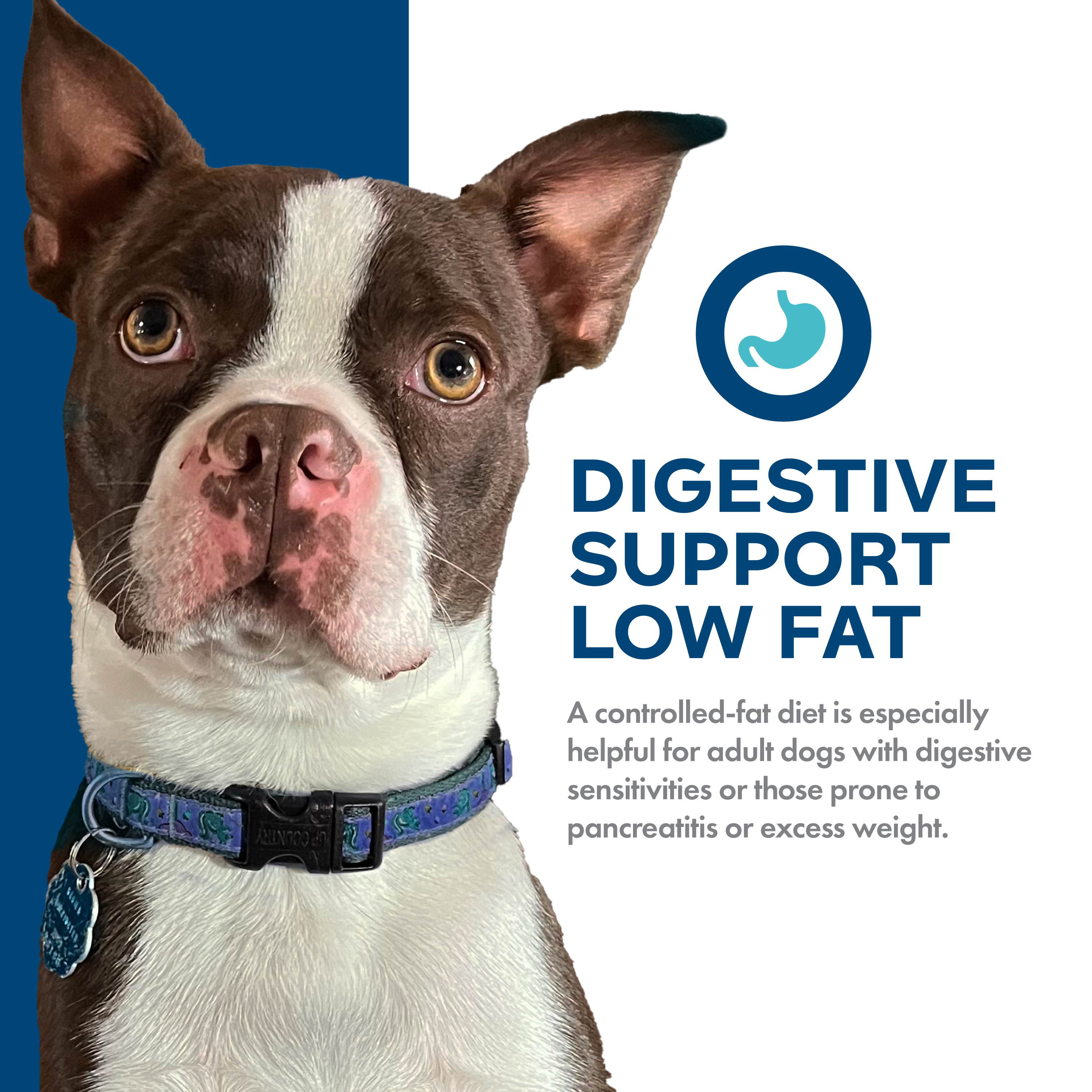
Both formulations feature carefully controlled fat concentrations to help support dogs requiring a reduced-fat diet and reduce the digestive demands associated with fat digestion. They also include specialized fiber blends to help maintain digestive regularity, stool quality, and support healthy gastrointestinal function.
When to Use Fromm Family Nutritionals Low-Fat Formula
When a dog experiences chronic digestive issues, such as gastrointestinal dysbiosis or leaky gut, or is simply experiencing age-related digestive sensitivities, a low-fat diet may be beneficial. Available in both canned and dry formats, these complete and balanced recipes provide essential daily nutrition and can be fed as a standalone diet or used as a topper to support digestive health.
Low-Fat Diet Advice
The first step in addressing a dog’s digestive concerns is consulting with a trusted veterinarian to identify any underlying conditions. If a reduced-fat diet is recommended, Fromm Family Nutritionals’ low-fat recipes can help support dogs with digestive sensitivities and provide complete and balanced nutrition for everyday feeding. These recipes may be particularly beneficial for dogs experiencing chronic digestive upset, including diarrhea, or abdominal discomfort associated with a sensitive or recovering gastrointestinal tract.
Contact our team of nutrition experts to learn more about incorporating low-fat foods into a pet’s diet.
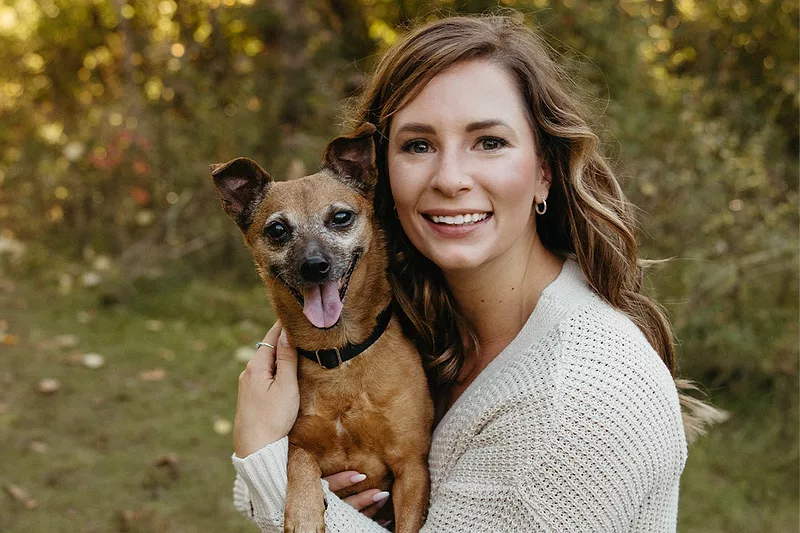
Danielle Opetz is the Doctor of Companion Animal Nutrition at Fromm Family Foods. She earned her Ph.D. in Nutritional Sciences from the University of Illinois Urbana-Champaign in 2023. She also holds a bachelor’s degree in zoology/animal biology from the University of Wisconsin-Platteville, as well as a master’s degree in animal sciences with an emphasis on companion animal nutrition from the University of North Carolina at Chapel Hill.