


Cookies help us deliver our services. By using our services, you agree to our use of cookies.

Guide to Rotational Feeding
“What’s for dinner tonight?”
For many pets, the answer to that question is a forgone conclusion: same as yesterday, just like the day before. While routine can be a good thing for your pet, what goes in their food bowl every day should be considered as the exception.
Here we’ll join Dr. Danielle Opetz, Fromm Family Foods’ Doctor of Companion Nutrition, to discuss how the practice of rotational feeding can benefit your dog or cat by enhancing not only their flavor experience, but also their gut health and general immunity.
What is Rotational Feeding
Rotational feeding for dogs and cats is the practice of alternating between different proteins, flavors, and food types to offer a well-balanced diet, reduce flavor fatigue, and potentially lower food sensitivity risks. It’s a nutritional philosophy that encourages variety and promotes good gut health, which is the cornerstone of good overall well-being in your pet.
Consider how you feed yourself as a pet owner: integrating a variety of healthy options to offer a balanced nutritional profile. As a result, you’re not only never bored with the same old food, but you also engage the flora in your gut, keeping a wide and robust variety for a healthy biome. The same results can be expected in both canines and felines when you switch up their diets.
Rotational Feeding: Cats vs Dogs
Dogs and cats have divergent nutritional needs, so any discussion of rotating foods for improved pet nutrition must account for these differences. While dogs can benefit from a range of grain types, cats are largely carnivorous and should have a diet that carefully accounts for carbohydrate intakes. The goal should be balancing the right amount of nutritional carbohydrates to harmonize with proteins and other high-quality ingredients.
Felines are also very selective in their diets. For many cat parents, finding a food they like can be an uphill battle. Therefore, it’s common for cats to settle on a single type or flavor of high-quality kibble that they enjoy. Wet foods tend to be the format of food most easily rotated for felines and can offer benefits from different proteins and increasing hydration status. Rotating food textures for young cats can help prevent the development of texture aversions, which is more common in felines than dogs.
Benefits of Rotational Feeding
Just like humans, adjusting your pet’s menu comes with a range of benefits that extend beyond the boredom factor. Benefits of rotating food types and proteins include:
Lowered Risk of Allergy Development - Changing up protein types and grain varieties may prevent pets from developing adverse reactions to them.
Enhanced Gut Health and Immunity - Diet diversity encourages a wider variety of healthy gut flora, which can improve metabolism and your pet’s ability to fight off illness.
Improved Nutrition - Exposure to a more diverse line of nutritional components like different amino and fatty acids, vitamins, and minerals can improve your pet’s nutritional profile.
Fights Flavor Fatigue - Mixing up flavors and textures keeps dogs and cats interested during mealtime and stimulates the brain along with the tastebuds.
Improved Hydration - Adding foods with high moisture content naturally boosts your pet’s water consumption, which is a vital piece of their overall health.
Potential Drawbacks of Rotational Feeding
Beware that rotational feeding may not be the right fit for your pet, particularly for sensitive animals. Every dog and cat is different, and often these differences go far deeper than food preferences. From unique allergies to specific nutritional needs, your veterinarian’s or nutritionist's advice will be essential in safely rotating nutrient sources. Some possible drawbacks to introducing rotational feeding include:
Gastrointestinal Distress - Rotating too frequently or suddenly can cause excess gas, vomiting, or diarrhea as the gut’s microbiome tries to adapt. Properly managing pace is one of the most important steps.
Pet Health Condition Variances - Pets with chronic health issues like sensitive stomachs or inflammatory bowel disease (IBD) may require consistent and highly digestible diets that rotational feeding may not provide.
Allergy Management Challenges - If your pet has known protein allergies, rotational diets can make it difficult to identify each one and may uncover more. Animals with allergies should consider a more consistent approach.
Logistic Challenges - Maintaining food freshness with multiple open containers can be difficult. Overfeeding due to caloric differences is also possible.
Changes to Preference - Pets can get used to getting new flavors at a regular pace, making it possible to increase boredom if they return to a more consistent diet.
Starting Rotational Feeding
Beginning a new diet regimen can be a challenge for both you and your pet, but long-term digestive health is worth a bit of short-term adjustment. Fromm Family Foods recommends the following guidelines for a smooth transition into rotational feeding for your dog or cat.
Get off on the Right Foot
Incorporating rotational feeding into your pet’s routine is best done when they’re young. Puppies and kittens’ relative neuroplasticity and lack of established flavor preferences give their owners the opportunity to mix up new proteins and formats with less resistance. However, older pets can break habits and learn to enjoy a wider range of foods, if they are introduced at the proper pace.
Ease Into New Proteins
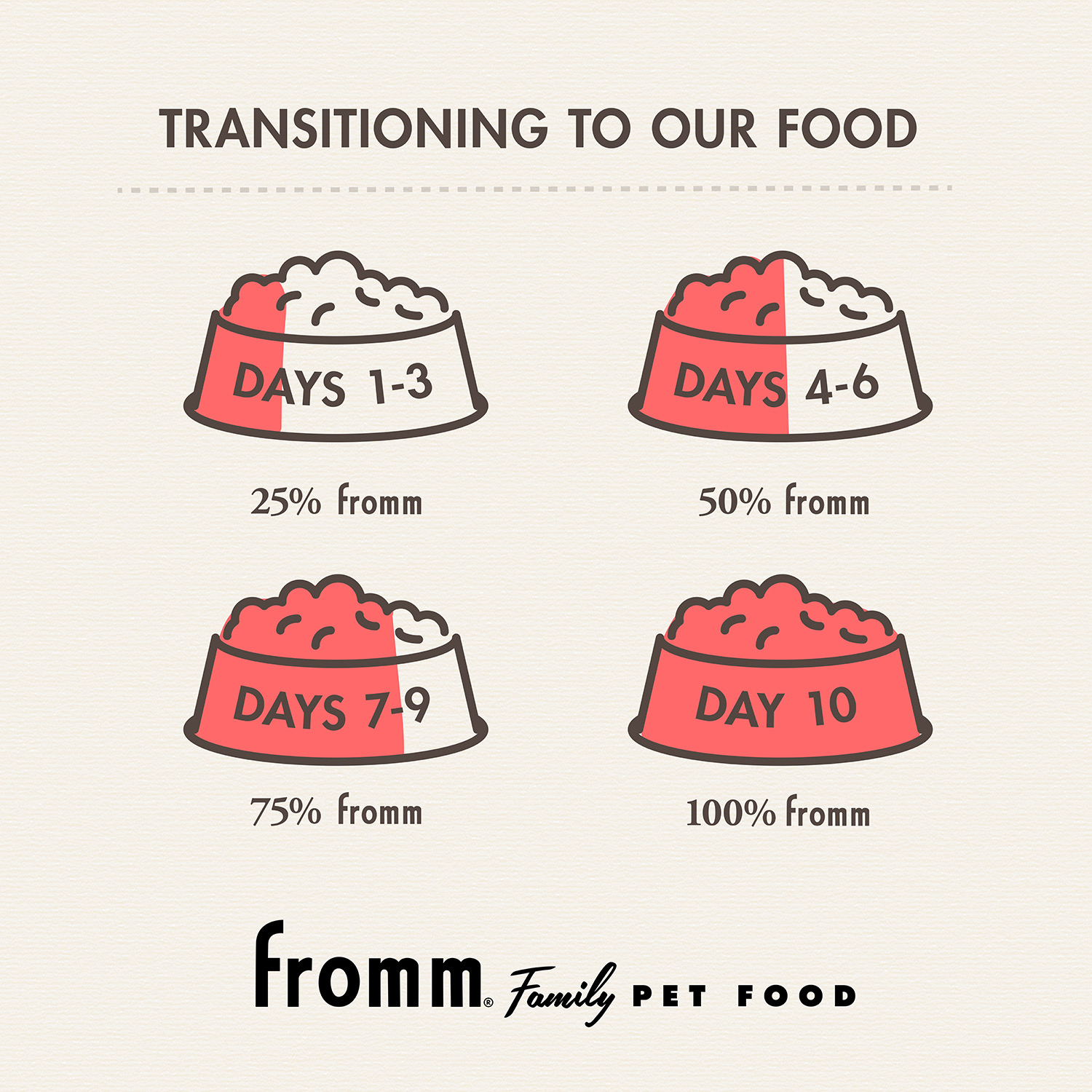
Pets who are not used to consistent rotations of proteins may experience digestive issues when they’re exposed to new types. Start slowly in order to lower this possibility. Mix a small amount of the new food into their old type and wait to see consistently firm stools for signs of proper adjustment. As long as digestive health persists, keep increasing the ratio of new to old food for the next week or so. As your pet adjusts well to the new protein, you can start adding it more regularly to the rotation going forward.
Protein & Food Format Rotations
Since different proteins offer their own unique nutrients, you can cycle through a wide range for added benefits, including chicken, pork, beef, and fish. Try different species of seafood for added variety.
If your pet is consistently eating dry kibble, a good way to start rotating new foods into their diet is by adding in small amounts of wet food, and vice versa. Switching food formats is an essential piece of rotational feeding. Wet food offers enhanced hydration, which is particularly important for feline urinary tract health, while kibble provides mechanical action against your pet’s teeth, which is crucial for overall health.
Frozen foods offer a distinct third option, often incorporating gently cooked ingredients that are highly nutritious and digestible. They also keep well in the freezer, offering the opportunity for pets to get yet another source of nutrients with more texture variance.
Fats & Carbohydrate Rotations
Both canines and felines can benefit from alternating fat sources that come with proper food rotation. Poultry fat and fish oils provide essential fatty acids like Omega-6 (linoleic acid) and Omega-3 (DHA & EPA) which promote skin, coat, joint, heart, and immune health.
Dogs can get a range of metabolic benefits from changing up carbohydrates and fiber sources, like including ancient grains, lentils, peas, and potatoes. While cats are obligate carnivores, they can also experience similar metabolic benefits from switching carbohydrates.
Rotation Frequency
When starting a feed rotation, remember to start slowly. Once you’ve learned which types of food your dog or cat likes and can digest well, you can change proteins and formats as much as your pet’s digestive system will allow. This could mean a new protein each night or waiting until you’ve run out of a certain kibble before rotating to another. Frozen food options are also great for mixing up proteins, carbohydrates and textures. Plus, they are able to be thawed on demand and will keep about as long as kibble -- around 18 months from the date of production -- in the freezer.
Sample Rotation Schedule
A basic pet food rotation schedule could look something like this:
Weekly Rotation - Change the protein source from chicken to fish every seven days
Bi-Monthly Rotation - Try a different food format every four to eight weeks
TIP: Try blending preferred food recipes and formats together, creating a wide range of combinations
[Sample Rotation Schedule Infographic]: [Dog], [Cat]
Monitor Your Pet
Whenever you change your pet’s diet (even without incorporating a rotational feeding schedule), look for signs of digestive distress like changes in stool frequency and patterns, or vomiting. These are the clearest signs that your pet is not taking to their dietary changes the way they should.
Other Rotational Feeding Tips
Now that we’ve established the basics of rotational feeding for dogs and cats, we can dig into a few essential tips for making the most out of this feeding style.
Consider a Feeding Journal
Rotational feeding is all about scheduling and tracking your pet’s menu. While certainly not required to find a healthy feeding rotation, keeping a journal of what they’re fed, when, and in what amount is a great practice. Be sure to note the results in your journal as well.
This will let you retrace your steps in case a protein, fat, carbohydrate, or recipe disagrees with your pet’s digestive system and will guide you on what nutrients to avoid, if any.
Check Labels - Primary Proteins, Fats, and Carbohydrates
Be sure to carefully read the ingredient panel of your selected pet food to best understand what the primary protein, fat, and carbohydrate sources are. It can be easy to misunderstand what the primary protein, fat, or carbohydrate is if you only glance at the product’s marketing message. Without checking the ingredients carefully, you may not be truly rotating nutrient sources as much as you think.
Manage Caloric Density Rather than Volume
Along with checking labels, you’ll want to pay close attention to caloric density between food flavors and formats. Don’t depend on the needed volume of food to be the same between food types. A cup of chicken kibble like Fromm’s Chicken À La Veg Recipe may have 389 calories, while the same cup of Fromm Adult Gold kibble will have 418 calories, which means you may be unintentionally increasing calories by a significant amount with each meal.
Food Storage & Management
Rotational diets can mean figuring out the best way to keep unused kibble fresh for the next time it cycles through the menu. Most kibbles will stay fresh if stored in their original bag within airtight containers in a cool, dark place. Another strategy is to buy smaller bags that will only last through each cycle. Frozen foods are a great choice for wet feeding options; individual portions can be thawed as needed while the rest remains in the freezer, extending shelf life.
Integrate Toppers, and Supplements
Many pet foods are complete and balanced on their own, but don’t be afraid to use small non-complete additions (such as toppers, mixers, or supplements) to introduce new nutrients for your pet. Things like bone broth or functional additions can help to add purposeful, unique nutrients and hydration at a controllable pace. A good rule is to limit caloric intake from these additions to 10% of your pet’s total daily calories. Sprinkling in frozen and dehydrated formats can also provide novel textural and flavor variety.
Other supplements, such as probiotics, can also be considered but should be rotated less frequently to maximize their benefits. Just be careful not to over-supplement and pay close attention to what’s already in your pet’s main food. Some foods, like Fromm’s dry food options, already contain beneficial probiotics.
Look for Variance within Brands
Brands often keep their nutrient concentrations consistent between different flavor and protein options. This is often intentional and can make it simpler to rotate options without accidentally altering caloric density or essential nutrients, which can happen if you switch brands often. Brands like Fromm offer multiple lines of flavors and ingredients that are designed for easy rotation.
Allergies? Consult Your Veterinarian
As mentioned earlier, each pet is unique in their caloric needs. Potential sensitivities or existing health conditions can influence their daily energy requirement. If your dog or cat has known sensitivities or allergies, talk to your veterinarian before beginning a rotational diet for your dog or cat in order to keep them safe and in good health. Your veterinarian may have good ideas of which nutrients will be most beneficial for your pet’s preferences and health conditions, saving you time and stress.
Consult Fromm’s Dietary Experts for Recommendations
The team at Fromm Family Foods is equipped to help you develop a dietary plan that will work well with your cat or dog. Contact our team for more information or nutritional advice on how best to use Fromm pet foods in rotational diets.

Danielle Opetz is the Doctor of Companion Animal Nutrition at Fromm Family Foods. She earned her Ph.D. in Nutritional Sciences from the University of Illinois Urbana-Champaign in 2023. She also holds a bachelor’s degree in zoology/animal biology from the University of Wisconsin-Platteville, as well as a master’s degree in animal sciences with an emphasis on companion animal nutrition from the University of North Carolina at Chapel Hill.